Open Schools Worldwide Reaches a New Milestone for Count Me In!
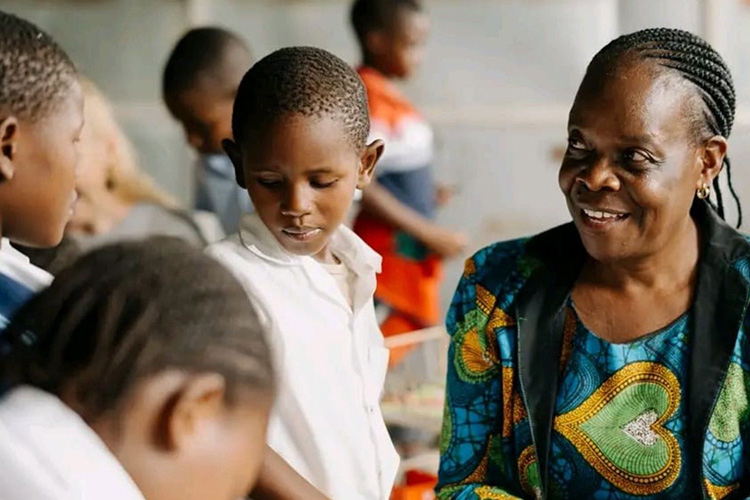
With more than 272 million children around the world out of school (UNESCO, 2025), the need for education abounds. Open Schools Worldwide (Open Schools) was born out of a vision to reach those children whose struggles existed because of a lack of education. Because the students who attend Open Schools projects have trauma that affects learning, the need for the curriculum is unique. However, its uniqueness hasn’t limited its reach. Starting out in South Africa in 2004, the curricula, Count Me In (Mathematics) and Write Me In (Literacy) are now used in 15 countries by over 14,000 learners.
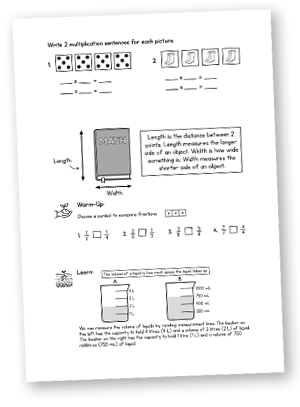
Each curriculum consists of two levels (Level 1 and Level 2) with each level having a Book A and a Book B. While the literacy and mathematics curriculum differ in grade level pacing, the goal is the same: seeking to fill the education gap no matter what age.
The Need for Trauma-Informed Curriculum
 As Open Schools celebrates this milestone reached for Count Me In, the completion of Level 2 Book A, we wanted to give some insight into how this curriculum is formed and what it’s like to be on the team. Alison Poulter and Karah Taylor share some insights. As writers for the curriculum, Alison and Karah both draw on their own experiences: working with under-resourced schools in low-income countries and teaching English Language Learners. Because of this background, the writers are familiar with focusing on trauma-informed education.
Trauma-informed education is all about adding practices that will bridge the gap between survival and learning. “When trauma exists for long periods of time, our brain gets stuck in survival mode, and it is nearly an impossible place to learn as the brain spends more time reacting to the environment instead of learning from it,” explains Karah. Therefore, trauma-informed education requires a curriculum focused on whole body activities, promotion of effort over performance, and regulation of the body and mind among learners in the program. Specifically for the mathematics curriculum, the writers want learners to see the intricate and simple beauty in mathematics which reveals the wisdom and design of our Creator.
The Thought Process of Writing Count Me In
While curriculum writers have a clear goal and vision in mind, the journey to its fulfillment is never easy but also never without the Lord’s presence. Alison and Karah share some of the beauty they’ve seen and challenges they’ve faced throughout their curriculum writing.
Count Me In is unique in terms of progression as learners can and are encouraged to move through lessons at their own pace. This means the tutor is still able to teach whole group lessons while each student can continue at their own speed. Alison and Karah describe this quality of the curriculum as “condensed and accelerated”. Being able to accomplish this requires a lot of team brainstorming, especially since this one curriculum is used in multiple countries!
As the writers keep in mind who the tutors are/will be, they remember to keep wording consistent as well as think about what words they choose to use. Tutors are often English Language Learners themselves, so wording is a big deal. They also remember just how diverse Open Schools environments are. Alison shares, “Some may have a classroom; some may not. Some are meeting under a Baobab tree; some are meeting with refugees.” You can never fully expect or predict where a student may be and what he/she may be seeing as they are working.
Each lesson applies the CPA approach to math (Concrete, Pictorial, Application). Each unit ends with a math project. Because this approach to mathematics uses a lot of images, it’s important for the team to consider those images. Are they relevant to a variety of countries? Do they appeal across the ages? This is where the writers and graphic designers work carefully together.
God’s Provisions Through the Writing Process
What Alison and Karah have learned to understand is that God will go before them and provide guidance through the challenges. He has faithfully provided talented writers and designers for each step. “I've just always been grateful. So many answers to prayer. It has just felt like God's hand guiding us as we write,” says Alison. “And it's God who sustains it,” adds Karah, “and it's God who provides for all these things. The curriculum writer, the editors, and the graphic designers, it's God who brings the unity among us.” Not only are His fingerprints throughout the principles of math, but they are also on the hearts of those who give their time and effort to write this beautifully unique curriculum.
Related Stories